PROFILE: COMFREY BOCKING 14: The Permaculture Darling
Common Name: Comfrey Scientific Name: Symphytum x uplandicum Family: Boraginaceae Guild Role: Dynamic Accumulator / Mulch Food Forest Layer: Herbaceous / Root
4 min read
DESCRIPTION
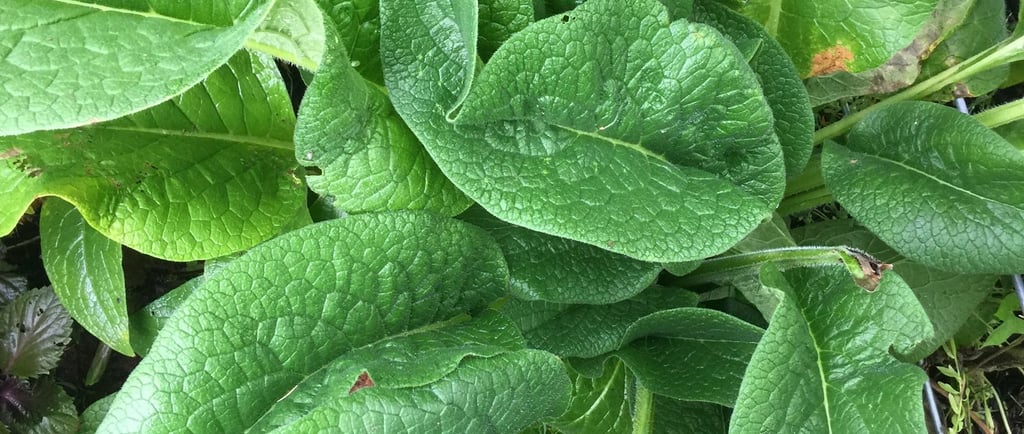
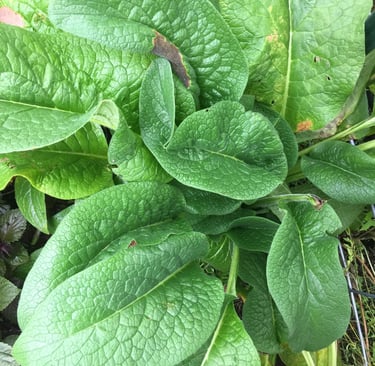
Comfrey Bocking 14 is one of many sterile Russian varieties of comfrey. This comfrey does it all. It’s most suited to mine minerals, build soil, and offer massive amounts of biomass, but is also known for its medicinal attributes and as an alternative animal feed. Because it is sterile and will not spread by seed only by rooting cuttings, it is easy to control and less likely to become invasive in the garden.
Comfrey is truly the permaculture darling plant and an “engine” for your food forest. (NOTE: We will also be offering Bocking 4, another Russian, sterile comfrey, which is more suited as a livestock feed, and Common Comfrey (Symphytum officinale), which does propagate by seed as well as root divisions, and is more suited for medicinal purposes.)
THE STORY & HISTORY
Description/History: Comfrey has a very long history as a medicinal plant, and its uses have been documented for over 2,000 years. Symphytum is derived from the Greek Symphytos, meaning “growing together.” It is also known as Great Comfrey, Boneset, and Knit-bone. One abstract, published by the US National Library of Medicine, in the National Institute of Health in their Phytotherapy department, states, “Comfrey has a centuries-old tradition as a medicinal plant. Today, multiple randomized controlled trials have demonstrated the efficacy and safety of comfrey preparations for the topical treatment of pain, inflammation, and swelling of muscles and joints in degenerative arthritis, acute myalgia in the back, sprains, contusions, and strains after sports injuries and accidents. Researchers believe a chemical compound, allantoin, found in comfrey, is principally responsible for the wound-healing effects. Allantoin is a common botanical extract often chemically synthesized in the pharmaceutical industry and used in a variety of ointments and creams designed for healing wounds.
WHY IT BELONGS IN YOUR GUILD
Dynamic Accumulator: Mines potassium, calcium, manganese, and minerals.
Biomass Producer: Can be harvested 4-6 times a year, providing tons of “chop and drop” mulch.
Compost Activator: High nitrogen content speeds up compost piles.
Liquid Fertilizer: Comfrey tea (fermented leaves in water) is a potent feed for fruiting plants, and we use comfrey in our Fermented Plant Juice (FPJ) amendments as well.
Living Mulch: Large leaves shade the soil, retaining moisture and suppressing weeds.
Pollinator Magnet: Flowers attract bees and beneficial insects.
Companion Plants:
Fruit Trees: Planted at the base to feed the tree with mineral-rich leaves.
Berries: Feeds raspberries and blackberries.
Vegetables: Provides “in place” fertilizer for your garden
USES
MEDICINAL
Poultice, infused oil, or crushed fresh
Expectorant - promotes the secretion of sputum by the air passages, used especially to treat coughs.
Antiseptics - substances that prevent the growth of disease-causing microorganisms
Demulcent - relieving inflammation or irritation.
Emollient - having the quality of softening or soothing the skin
Vulnerary - of use in the healing of wounds.
Anti-Inflammatory - used to reduce inflammation
SOIL BUILDER: soil tests confirm that soil nutrients increase in the presence of comfrey even when it is not used as mulch, side dressing, or liquid fertilizer, but just allowed to grow.
Deep mining roots. Dynamic Accumulator,
Compost activator
Green Manure
Liquid Compost/Foliar Feed
Accumulates in soil: N, K, P, Ca, Mn, Mg, Cu, Na, S
Potassium, Nitrogen, Calcium, Phosphorus, Magnesium, Copper
FODDER:
There has been conflicting advice in this area, as well as comfrey used in the herbal communities. This is a good paper by Purdue University that looks at comfrey as an alternative fodder crop. Like anything else, there can be too much of a good thing, and even though I regularly give this to poultry, I rotate in many other plants as well. https://hort.purdue.edu/newcrop/afcm/comfrey.html
20 times more protein than soy
Can reduce feed by 40% for chickens, up to 70% for pigs, and 30% for ruminants
Improves egg quality
Doesn’t taint milk or cause bloat in ruminants
Helps digest cellulose-rich feeds
Reduces mastitis in milk goats, sheep, and cows.
GROWING GUIDE
Yield: Extremely high. A single plant can produce 10+ lbs of leaves per season. Harvest anywhere from 3-6 times a year.
Plant Type: Herbaceous Perennial
Leaf Type: Deciduous (dies back in winter, returns in spring)
Cultivars/Varieties: ‘Bocking 14’ (Sterile, high yield).
Growth Rate: Fast. Establishes quickly and spreads via root rhizomes.
Light: Full sun to partial shade.
Moisture: Medium to High. It likes to stay damp. In zone 8b, I protect it from afternoon sun and make sure it is heavily mulched to keep roots moist. It will die down to the ground in the summer if it dries out.
Soil: Adaptable to most soils but does really well in moist, well-draining soil.
Growing Notes:
Control: It spreads by root division. Bocking 14 is not an aggressive plant, and I pepper it throughout my space.
Winter: Dies back completely in winter. The crown will resprout in early spring.
Harvest: Cut leaves back to 2-3 inches above the ground to encourage rapid regrowth.
Propagation:
Root Cuttings: Dig up a small piece of root (2-3 inches) and plant it horizontally or vertically.
Division: Divide established clumps in early spring or fall.
Note: Bocking 14 does not produce viable seeds.
Maintenance:
Harvest Regularly: The more you cut, the more it grows.
Mulch: Keep the base mulched to retain moisture in warmer areas.
Contain: Check edging annually to ensure it hasn’t spread beyond the intended area.
HARVEST & PRESERVATION
When to Harvest: From spring until the first frost. Best before flowering for the highest nutrient content.
How to Harvest: Cut leaves close to the ground.
Storage & Preservation
Use fresh immediately for mulch.
Compost Tea: Ferment leaves in a bucket of water for 2-4 weeks to make a liquid fertilizer.
Drying: Dry leaves for compost activator or external poultices (not for tea).
Freeze: Freeze chopped leaves for later use in compost.
Website: goodtilthfarm.com
Tea Shop: loricatea.shop
This plant is part of our Core 52 List. Available in the monthly Plant Guild Drops