
PLANT PROFILE: JERUSALEM ARTICHOKE (SUNCHOKE)
Common Name: Jerusalem Artichoke / Sunchoke Scientific Name: Helianthus tuberosus Family: Asteraceae Guild Role: Root Crop / Biomass Producer Food Forest Layer: Root / Herbaceous
3 min read
DESCRIPTION
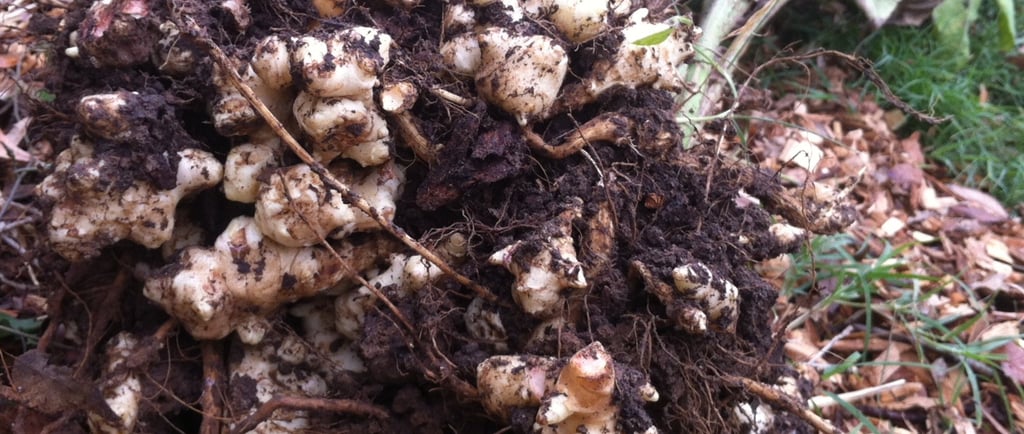
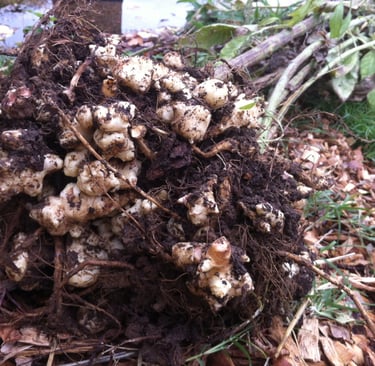
Jerusalem Artichoke is not related to artichokes or to Jerusalem. It is a vigorous native North American sunflower that produces tall stalks (6–10 feet) topped with vanilla-scented yellow blooms, which are a great late-season pollinator plant. Grown as a hedgrow, it can provide a substantial seasonal screen, and at the end of the season, you will have heaps of biomass. Below ground is why it is primarily grown, for its crisp, nutty tubers that multiply prolifically, making it a “plant it and forget it” survival crop. Sunchoke is one of the most productive calorie crops you can grow in a food forest, yielding an incredible amount of edible tubers with minimal input.
THE STORY & HISTORY Jerusalem Artichoke is one of the few major food crops native to North America, cultivated by Indigenous peoples for centuries before European contact. The tuber was a staple food of many tribes across the eastern and central United States. Samuel de Champlain encountered it in Cape Cod in 1605 and sent specimens back to France, where it became widely cultivated and eventually spread across Europe. During periods of famine and wartime scarcity, sunchokes proved their worth as a reliable, low-maintenance calorie source. The tuber stores its carbohydrates as inulin rather than starch, making it a prebiotic food that feeds gut bacteria — a nutritional advantage that modern science has only recently appreciated, though one that can cause digestive discomfort if eaten in large quantities by those unaccustomed to it.
WHY IT BELONGS IN YOUR GUILD
Calorie Powerhouse: One of the most productive root crops per square foot available to temperate growers.
Biomass Producer: Tall stalks provide abundant chop-and-drop mulch material at the end of the season.
Windbreak / Seasonal Screen: 6–10 foot stalks create a temporary living fence or visual barrier during the growing season.
Pollinator Resource: Late-season yellow flowers attract bees and beneficial insects when little else is blooming.
Prebiotic Food: Inulin-rich tubers support gut health.
Zero Maintenance: Once established, it practically grows itself.
Companion Plants:
Comfrey: Plant nearby — comfrey mines minerals that feed the sunchokes, while sunchoke stalks provide carbon-rich mulch in return.
Fruit Trees: Use as a seasonal nurse crop on the sunward side of young trees.
Climbing Beans: Sunchokes serve as a living trellis for pole beans (a classic Three Sisters-style companion strategy)
USES
CULINARY
Raw: Crisp and nutty, similar to water chestnut. Excellent shaved into salads.
Roasted: Develops a sweet, earthy flavor. Roast like potatoes.
Soup: Pureed sunchokes make a velvety, rich soup.
Pickled: Lacto-fermented sunchokes are a probiotic delicacy.
MEDICINAL / NUTRITIONAL
Prebiotic — inulin feeds beneficial gut bacteria (Bifidobacteria, Lactobacillus).
Low Glycemic Index — inulin does not spike blood sugar, making it suitable for diabetics in moderation.
High in Iron, Potassium, and Thiamine.
Caution: Inulin can cause flatulence and bloating if consumed in large amounts before the gut adapts. Start with small portions.
BIOMASS / SOIL
Chop and Drop: End-of-season stalks are carbon-rich mulch.
Tubers left in the ground: Act as an in-situ root cellar — dig as needed through winter.
GROWING GUIDE
Yield: Extremely high. A single tuber can produce 5–15 lbs of new tubers per season.
Plant Type: Herbaceous Perennial
Leaf Type: Deciduous (dies back completely in winter; tubers overwinter in the ground)
Cultivars/Varieties: Several named varieties exist (’Stampede’ for early maturity, ‘Red Fuseau’ for smoother, red-skinned tubers, ‘White Fuseau’ for easier peeling). Many growers simply plant whatever tubers are available.
Growth Rate: Very fast. Reaches full height by mid-summer.
Light: Full sun.
Moisture: Low to Medium. Remarkably drought-tolerant once established.
Soil: Adaptable to almost any soil. Produces best in loose, well-draining soil but will grow in clay.
GROWING NOTES:
Control: THIS IS THE KEY CONSIDERATION. Every tiny tuber left in the ground will resprout. Plant in a dedicated bed, a contained area, or somewhere you won’t mind it spreading. Do not rototill near sunchokes — you will multiply them.
Winter: Tops die back after frost. Tubers are cold-hardy and store best left in the ground and dug up as needed.
Harvest: Dig tubers after the first frost for the sweetest flavor. Continue harvesting through winter in areas where the ground doesn’t freeze solid.
Propagation: Tubers: Plant whole or sectioned tubers. 3–4 inches deep, 12–18 inches apart.
MAINTENANCE:
Contain: Define boundaries clearly. Raised beds, barriers, or dedicated patches work best.
Harvest Thoroughly: Dig aggressively at harvest to minimize volunteer resprouting (though some will always escape).
Cut Stalks: After frost, cut dead stalks and use them as mulch or as carbon for compost.
HARVEST & PRESERVATION
When to Harvest: After first frost through late winter. Cold converts inulin to fructose, improving sweetness. So if you are looking to preserve inulin, harvest before frosts.
How to Harvest: Dig carefully with a fork. Tubers cluster near the base — work outward from the stalk.
Storage & Preservation: In-Ground: Best storage method. Mulch heavily and dig as needed. Refrigerator: Store unwashed tubers in a bag in the crisper for 1–2 weeks (they wrinkle quickly out of soil). Freeze: Blanch and freeze sliced tubers. Dehydrate: Slice thin and dehydrate for chips or flour.
Website: goodtilthfarm.com
Tea Shop: loricatea.shop
This plant is part of our Core 52 List. Available in the monthly Plant Guild Drops