
PLANT PROFILE: GOJI BERRY Quick ID Common Name: Goji Berry / Wolfberry Lycium barbarum
Family: Solanaceae Guild Role: Fruit / Medicinal / Hedge Food Forest Layer: Shrub (Mid-story)
3 min read
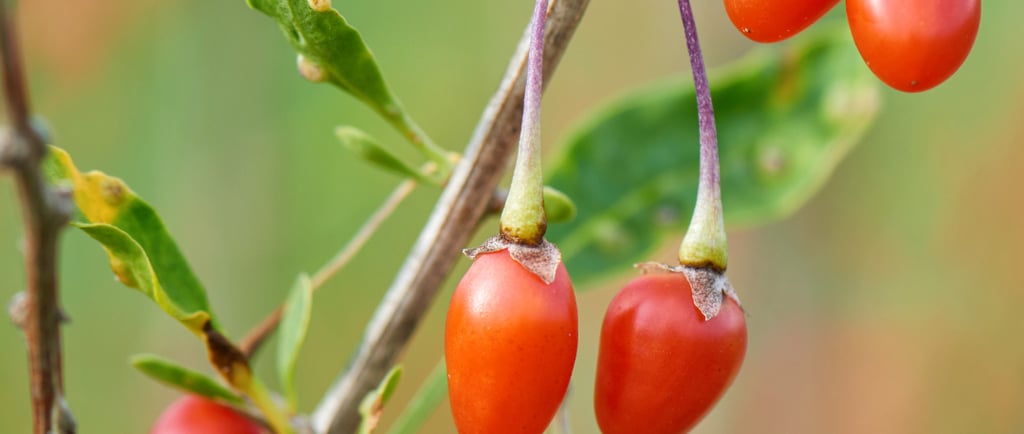
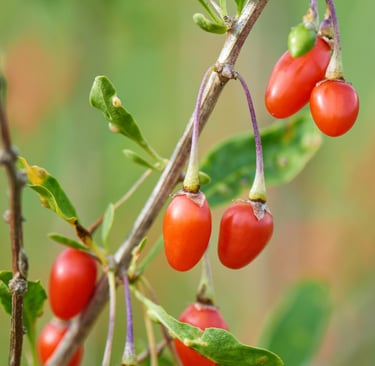
DESCRIPTION
Goji Berry is a hardy, deciduous shrub that can grow to 8ft tall and 8ft wide. It produces edible and medicinal, small berries that are mildly sweet. Goji thrives in USDA zones 6–9 and, once it’s established, will tolerate poor soil and drought well. It fruits best in well-drained soil in full sun, but will also benefit from partial afternoon shade in hotter climates. Goji is mostly seen on grocery store shelves in its dried form, but can be used fresh as well. Leaves can be made into teas, and the roots are used for fever reduction.
THE STORY & HISTORY: Native to China, specifically Ningxia and Xinjiang provinces, Goji has been used in Traditional Chinese Medicine for over 2,000 years for longevity and vitality, helping to support the liver and kidneys, improving eyesight, and restoring energy.
WHY IT BELONGS IN YOUR FOREST GARDEN
Extended Harvest: Berries ripen from late summer through early autumn.
Wildlife Shelter: Dense and thorny branches provide nesting sites and protection for birds and small mammals.
Pollinator Magnet: Flowers attract bees and butterflies.
Soil Stabilizer: Goji has a substantial root system that stabilizes sandy banks and prevents erosion.
Versatile: Fruit (raw/dried), leaves (tea), and roots medicinally.
USES
CULINARY
Fruit: Eat fresh or dry for long-term storage.
Shoots: Young shoots can be lightly cooked and eaten as a vegetable.
Leaves: Dried or fresh leaves make a nutritious tea substitute. Leaves will wilt rapidly once harvested.
MEDICINAL
Tonic: A tasty decoction can be made from the fruits and is used to help lower blood pressure and blood cholesterol levels, supporting the liver and kidneys.
Antioxidant: Rich in Vitamins A, C, E, flavonoids, and essential fatty acids.
Eye Health: Traditionally used to treat poor eyesight and vertigo.
Root Bark: A bitter antibacterial herb used to control coughs and lower fevers.
Research: Goji has been investigated as a food capable of reducing the incidence of cancer and halting or reversing tumor growth.
FOOD FOREST PLACEMENT:
The Mother Plant: Goji’s many canes can be trimmed and center-supported for a weeping effect. It is perfect for an unused corner or in a row to act as a boundary.
Best Placement: South or West Side (Full Sun)
Design: Plant Goji on the South or West side of your garden.
The Living Fence: Planting along a property line or path in a single row, 3–4 feet apart, creates a thorny, food-producing hedge row that shelters the inner garden from winds.
GROWING GUIDE
Yield: Moderate to High. Mature plants produce fruit for 2–3 months.
Plant Type: Deciduous Shrub (Hardy to Zone 6–9).
Leaf Type: Deciduous (drops leaves in winter and resprouts from woody stems in spring).
Cultivars: Lycium barbarum is the primary species grown for fruit. Other popular varieties are ‘Crimson Star’ and ‘Phoenix Tears’.
Growth Rate: Moderately fast. Reaches 3–10ft within a couple of years.
Light: Full sun for abundant fruiting; tolerates semi-shade.
Moisture: Prefers moist soil, but will tolerate drought once it’s established.
Soil: Tolerant of sandy loam and clay
Growing Notes:
Control: Produces suckers freely and can become invasive.
Winter: Dies back in hard freezes but returns from the crown and roots. Mulch the base in colder zones.
Harvest: Berries ripen from late summer through early autumn. Pick when fully red-orange and slightly soft.
Propagation:
Seed: Sow in early spring. Plant out late spring/early summer. Pinch shoot tips to encourage bushy growth and eat them!
Cuttings: High success and can be rooted in water or soil.
Layering: Weigh down canes in damp soil with a rock or brick and cut off after new roots form.
Maintenance:
Pruning: Can be pruned aggressively.
Mulch: Apply mulch around the base to retain moisture and suppress weeds.
Pest Watch: Generally, goji is pest-resistant. Birds love the berries, so netting may be necessary!
HARVEST & PRESERVATION
When to Harvest: Harvest when berries turn red in late summer to early autumn.
How to Harvest: Hand-pick or shake branches onto a tarp. Ripe berries fall off easily. Wearing gloves is helpful with the thorns!
Storage & Preservation:
Fresh: Refrigerate for up to a week.
Drying: Dehydrate at low temperature (115°F) for best nutrient retention. Store dried berries in airtight jars away from light.
Freeze: Freeze fresh berries on a tray, then transfer to bags for long-term storage.
Tea: Steep fresh or dried berries and leaves directly.
Website: goodtilthfarm.com
Tea Shop: loricatea.shop
This plant is part of our Core 52 List. Available in the monthly Plant Guild Drops